


TL;DR — The Summary
The Problem: Most programs fail because they are built in the wrong order, not because of “bad partners.”
The Fix:
Map the revenue path before picking partner types.
Wait to recruit until your own sales motion is repeatable.
Build internal ops (attribution/handoffs) before external recruiting.
Chase proof, not scale (get 3 referenceable wins first).
Iterate like a product, don’t launch like a policy.
Most partnership programs don’t fail because of bad partners. They fail because the program was built in the wrong order.
We often feel pressure to “build an ecosystem” on Day 1. We look at mature programs (like Salesforce or HubSpot) and try to copy their Year 10 strategy when we are in Year 0. We launch portals, tiering structures, and intricate commissions before we’ve closed our tenth partner deal.
If I were starting from scratch today—no legacy baggage, no pressure to hit a vanity partner count—here is exactly what I would focus on first.
1. Start With the Revenue Path, Not the Partner Type
The most common first step is usually a brainstorming session: “Who should we partner with? Agencies? Tech vendors? Resellers?”
This is the wrong first question. You cannot choose the Who until you understand the How. You need to understand how money moves through your organization before you invite someone else to join that journey.
What I’d do instead:
Pick one revenue motion to optimize first: Don’t try to launch referral, reseller, and tech integration programs simultaneously. Pick one (e.g., Co-sell).
Map the deal path end-to-end: Actually draw it out. Where does the lead come from? Who talks to the customer? Where do handoffs usually break?
Only recruit partners who naturally fit that path: If the map shows you need intro calls, find partners who have trust. If the map shows you need implementation help, find partners with technical chops.
Practical tip: If you can’t draw the partner’s specific role on a single deal timeline (e.g., “Partner enters at Stage 2, exits at Stage 4”), you’re not ready to recruit them.
2. Delay Recruiting Partners Longer Than Feels Comfortable
There is a temptation to use partners to fix a broken sales process. Leaders often think, “Our direct team is struggling to sell this new product, so let’s get partners to sell it.”
This always backfires.
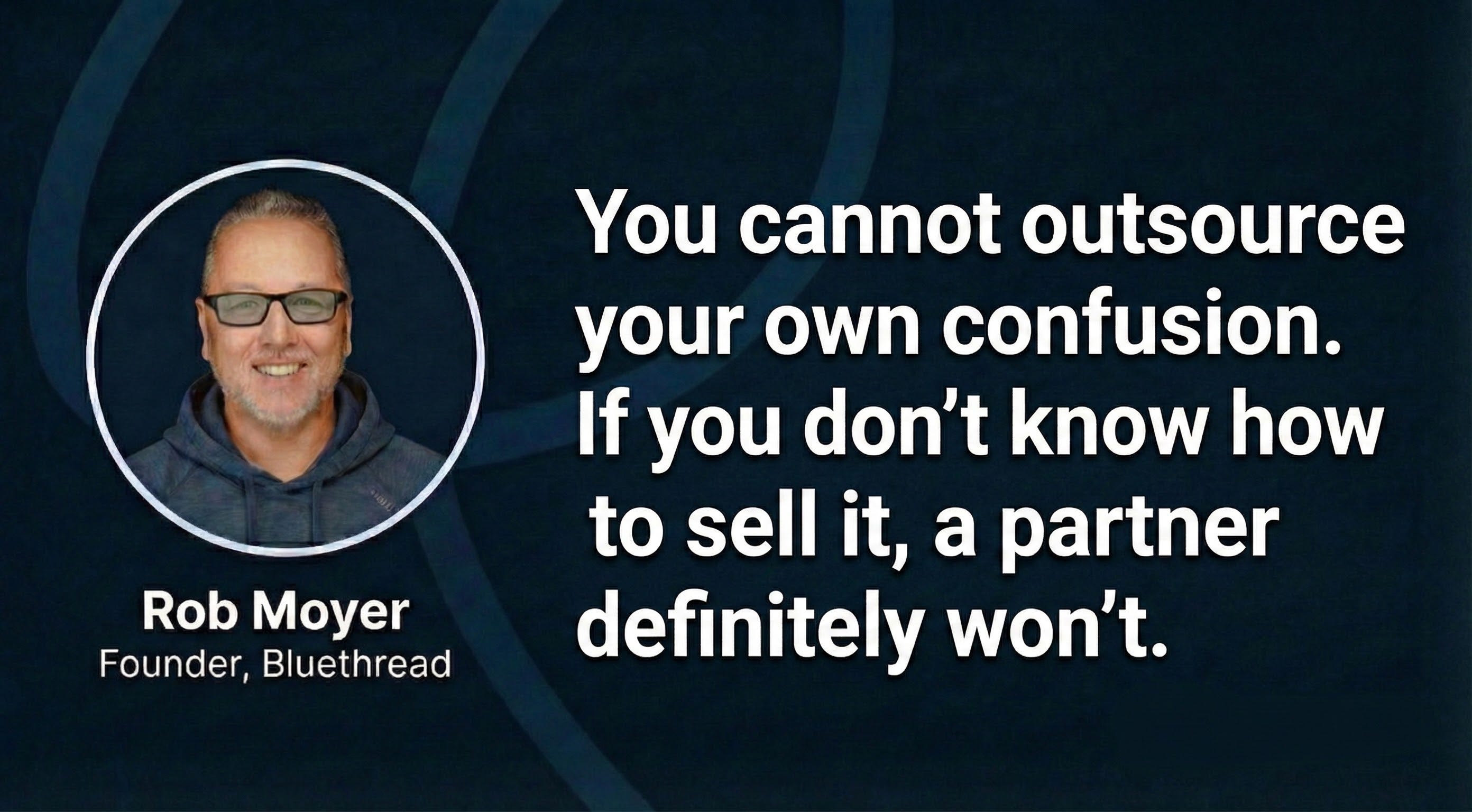
You cannot outsource your own confusion. If your best AEs are struggling to position the product, a partner with 10% of the knowledge and 0% of the equity has no chance.
What I’d wait for:
Clear ICP and a repeatable sales motion: You need a “playbook” to hand over.
At least a few deals you can confidently recreate: You need proof that the market actually wants this.
Internal clarity on payment: Know exactly how partners get paid and how internal reps get credited before the first conflict arises.
Practical tip: If sales can’t explain clearly why a partner helps them win this deal, partners won’t magically figure it out either.
3. Design the Internal System Before the External One
Partnerships don’t break because the partner is incompetent. They break because Sales, Marketing, and CS aren’t aligned on how to ingest what the partner is bringing.
If you bring a partner deal to a sales rep and they don’t know how to log it, tag it, or who gets commission, that deal will die.
What I’d lock down early:
Operations: How partner deals are surfaced, qualified, and tracked in the CRM.
Ownership: Who owns the deal communication at each stage?
Escalation: What happens when things go wrong? (Because they will).
Practical tip: If your partner manager is manually chasing deal updates via Slack or email, you don’t have a partner problem. You have a system problem.
4. Optimize for Proof, Not Scale
Early on, scale is a distraction. “Number of partners signed” is a vanity metric that often hides a lack of revenue.
In the early days, ten passive partners are a liability; two active partners are a business model.
What I’d focus on:
2–3 partners who can produce real outcomes: Go deep with a few rather than wide with many.
Repeatable deal stories: Look for patterns. “Every time Partner X introduces us to a CTO, we close in 30 days.” That is a story you can scale.
Internal confidence: You need your internal team to believe “this works.”
Practical tip: If you can’t point to three specific deals you’d proudly show your CEO, you’re not ready to add more partners.
5. Treat the First 6 Months Like a Product, Not a Program
“Programs” feel static—like a policy document you write once and file away. “Products” are alive—they are shipped, tested, iterated, and improved based on user feedback.
Your partnership motion is a product. Your partners are the users.
What I’d ship first:
A narrow scope and a clear hypothesis: “We believe Agencies will refer us because we help them retain clients.”
Simple rules: Avoid complex tiering decks or 50-page legal agreements.
Fast feedback loops: Talk to your partners and your sales team weekly to fix bugs in the process.
Practical tip: If you’re building fancy dashboards and Gold/Silver/Bronze models before real deals close, you’re optimizing too early.
Final Thought
Strong partnership programs aren’t built by adding more partners or buying better PRM software.
They’re built by sequencing the right work in the right order.
If you skip the foundation to chase scale, you will eventually have to tear it all down and rebuild it anyway. Do these five things well, and scale becomes a consequence, not the goal.
Rob Moyer is the Founder of Bluethread, where he helps companies build partnership programs based on revenue reality, not ecosystem hype. Follow him on LinkedIn here
Don’t start partnerships if you haven’t figures out your core ICP.
Your partner will definitely not wait until you have figured that out (maybe even go to your competitor).
Be clear. Enable your partners. Otherwise they will never come or run.