


I have been in partnerships long enough to watch the language change several times.
First, we called it channels.
Then alliances.
Then ecosystems.
Now co-sell is trending.
Now we talk about orchestration, partner intelligence, and agentic GTM.
The terminology keeps evolving because the market keeps evolving. New technologies create new business models. New platforms create new routes to market. New tools give us better ways to identify opportunities, coordinate teams, and measure outcomes.
All of that matters.
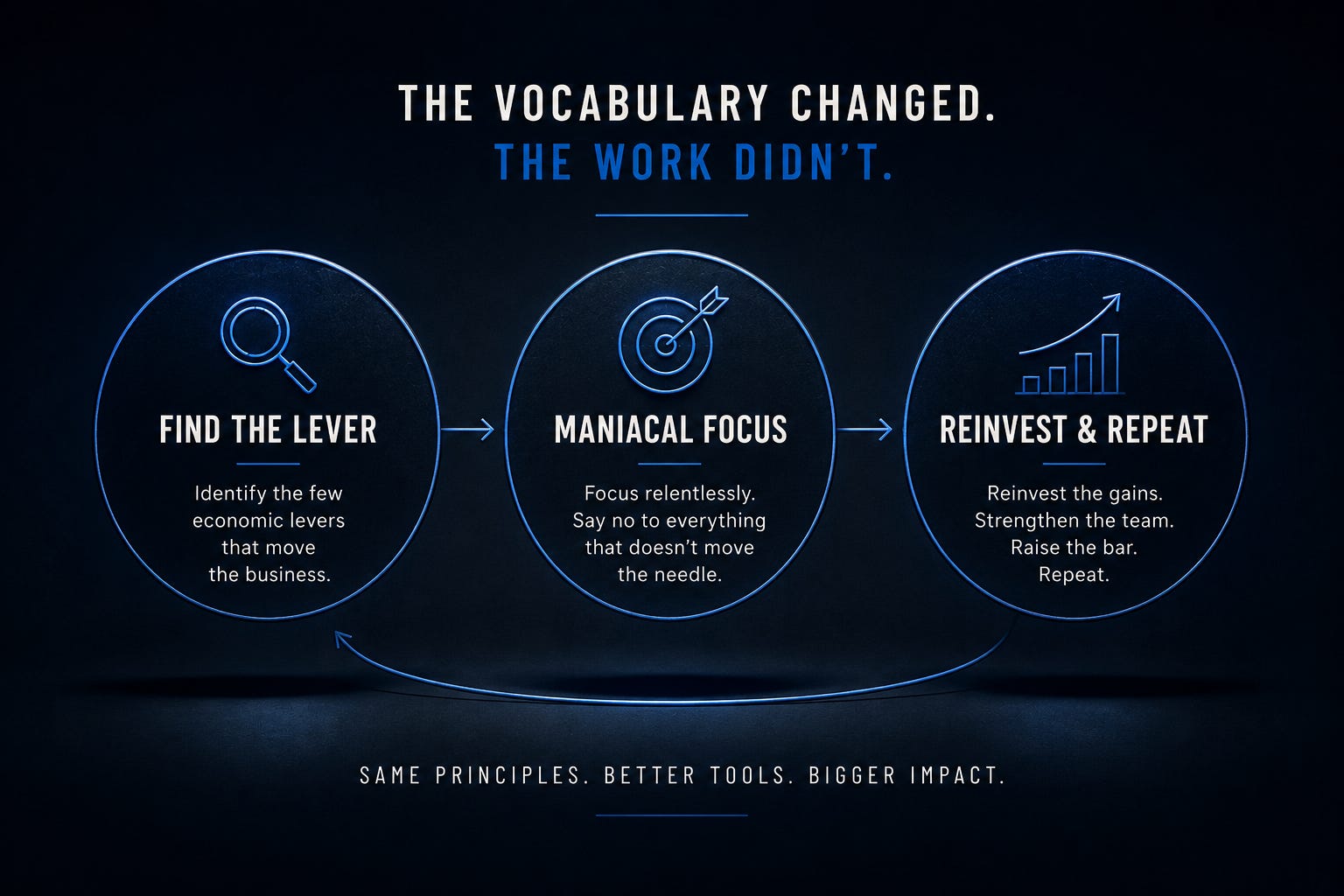
But beneath the language, the work has stayed remarkably consistent.
Understand the customer.
Choose the right partners.
Find the few economic levers that matter.
Focus on them maniacally.
Execute.
Learn.
Repeat.
That was true when I was building cloud and mobility businesses. It was true when I built the partner organization at Gong. And it is still true today as companies try to understand what AI means for their go-to-market strategy.
The tools have changed.
The fundamentals have not.
We often use new language to avoid old problems
Every few years, the partnership industry finds a new vocabulary.
Sometimes that language reflects a real shift.
“Ecosystem” is broader than “channel.” It recognizes that value can come from technology partners, services firms, marketplaces, hyperscalers, communities, and other participants that do not fit neatly inside a resale model.
“Co-sell” is more specific than “alliance.” It describes teams actively working accounts and opportunities together.
“Orchestration” reflects the reality that modern partnership motions cross sales, marketing, customer success, product, operations, and finance.
These are meaningful distinctions.
The problem starts when the new terminology becomes a substitute for doing the work.
A company announces an ecosystem strategy but has not decided which partners matter.
A team launches a co-sell program without identifying the accounts it wants to pursue.
A leader buys an orchestration platform before defining what exactly needs to be orchestrated.
The language sounds modern.
The operating model underneath it is often missing.
Most growth comes from a few things done exceptionally well
At one point in my career, we grew a business by roughly 12 times.
The philosophy behind that growth was remarkably simple.
Every year, I focused the organization on three things.
Those three things changed as the business changed, but the operating principle did not.
We identified the few levers that mattered most, and then we focused on them maniacally.
When we were building the Microsoft cloud business, the opportunity was not simply to sell more Office 365.
The real question was:
What could we attach to Office 365 that would create more top-line revenue and improve profitability?
So we went looking for the right vendors.
We focused on the products that naturally belonged around the Microsoft offering.
We built the motion around attach.
Not twenty priorities.
Not a broad innovation agenda.
Attach.
When we launched the Google business, the focus was different.
Google was strong in education.
That was the market opportunity.
So we concentrated on EDU.
We did not try to make the Google business everything to everyone. We focused on the segment where the company already had strength and where we had a credible right to win.
Then there was mobility.
We had meaningful businesses with Verizon, T-Mobile, and AT&T.
But the metric that mattered most was activations.
Activations drove profitability.
So that became the focus.
Cloud attach.
Google in education.
Mobility activations.
Three different businesses. Three different economic levers. One operating philosophy.
Find what matters.
Focus relentlessly.
Build the organization around it.
The profitability those motions created allowed us to add resources, strengthen the team, and invest further in growth.
That created a cycle.
Focus produced results.
Results produced resources.
Resources expanded our ability to execute.
The business grew because the priorities were clear enough for the entire organization to act on them.
Strategy still becomes real through execution
Partnership teams spend a lot of time creating strategies.
They map the market.
They recruit partners.
They build tiers.
They create presentations.
They announce programs.
But strategy only becomes valuable when it changes what someone does on Monday morning.
Which partner are we prioritizing?
Which customer problem are we solving together?
Which accounts should we pursue?
What is the economic lever?
Who owns the next action?
What evidence will tell us whether the motion is working?
These are not glamorous questions.
They are operational questions.
They are also where most partnership strategies succeed or fail.
The strongest programs I have seen did not win because they had the most complicated framework. They won because they turned strategy into a repeatable operating rhythm.
A small number of priorities.
Named owners.
Clear next steps.
Real customer opportunities.
Consistent follow-through.
The strategy mattered, but execution created the result.
Focus is not about doing less for the sake of doing less
People sometimes hear “focus on three things” and assume it means ignoring everything else.
That is not the point.
A business still has customers to support, teams to manage, budgets to build, and dozens of operational responsibilities.
Focus means recognizing that not every activity deserves the same level of attention.
Some work keeps the business running.
A few things change the trajectory of the business.
The job of the operator is to know the difference.
In the Microsoft business, attach changed the economics.
In the Google business, education gave us the strongest market position.
In mobility, activations drove profitability.
The priorities were not chosen because they sounded strategic.
They were chosen because they were connected to how the business actually made money.
That distinction matters.
A good priority is not simply important.
It has economic consequence.
Customers still want simplicity
One of the most expensive lessons of my career came while I was helping build an early cloud marketplace.
We built what we believed the market needed.
It was ambitious.
It was technically interesting.
It also was not working.
After burning through a significant amount of money, I called several of our best Microsoft partners and asked a much simpler question:
What do you actually need?
Their answer was not more features.
It was simplicity.
Can I buy this in a few clicks?
Can I manage my customers easily?
Can you remove the friction?
That feedback changed the product and changed my thinking.
Every new technology cycle creates more complexity. The best companies do not pass that complexity along to the customer. They absorb it.
That was true in the early days of cloud.
It is true now with AI.
Customers do not care how sophisticated the system is behind the scenes. They care whether it helps them get something done faster, better, or with less risk.
The technology can change dramatically.
The customer’s tolerance for unnecessary complexity does not.
Relationships still matter, but they are not the outcome
Partnerships have always been built on trust.
That has not changed either.
A strong relationship creates access. It creates candor. It allows two companies to work through difficult issues without immediately giving up.
But a relationship is not an operating model.
It does not automatically create pipeline.
It does not close deals.
It does not improve customer retention.
It does not assign ownership.
The relationship is the permission layer.
It allows the work to begin.
The mistake is believing that the existence of a relationship proves the partnership is productive.
Modern partner leaders need both.
They need the trust of a relationship manager and the discipline of an operator.
They need to understand the people and the economics.
They need to build goodwill and convert that goodwill into joint action.
The relationship still matters.
It simply cannot be where the work ends.
AI improves the loop. It does not remove the need to choose.
AI is changing partnership work quickly.
It can gather information faster.
It can analyze markets.
It can identify patterns across thousands of companies.
It can summarize meetings, recommend accounts, draft joint value propositions, and automate workflows.
That gives partnership teams leverage they have never had before.
But AI also creates a new problem.
It makes it possible to see too many opportunities.
When information was scarce, the advantage came from finding it.
Now information is abundant.
The advantage comes from deciding what deserves attention.
The operating loop is still simple:
Gather information.
Analyze what it means.
Choose the few things that matter.
Focus on them maniacally.
Execute with discipline.
Learn from the outcome.
Repeat.
AI can dramatically improve the gathering and analysis.
But it cannot remove the need for judgment.
Someone still has to decide what not to pursue.
Someone has to identify the economic lever.
Someone has to choose which partners matter.
Someone has to protect the team from distraction.
Someone has to turn insight into action.
That responsibility still belongs to the operator.
The future will look different. The work will feel familiar.
Partnerships will continue to evolve.
AI agents will manage parts of the workflow.
Marketplaces will become more important.
Data will become more connected.
Partner programs will become more embedded inside the broader revenue engine.
The vocabulary will change again.
That is healthy.
But when the next term arrives, we should ask a basic question:
Does this help us do the work better, or does it simply give us a new way to describe it?
Because the fundamentals are not complicated.
Understand the customer.
Find the economic lever.
Choose the right partners.
Simplify the motion.
Create clear ownership.
Focus on the few things that matter.
Execute consistently.
Measure what happened.
Adjust.
Repeat.
The vocabulary changed.
The work didn’t.