


A few years ago, one of my leaders came to me with a partner program proposal. Good thinking. Real effort. A plan I actually believed in.
I had to kill it.
Not because the strategy was wrong. Because the math didn’t work. I looked at what they handed me and said, “Your math ain’t mathing. I can’t take this to the CFO.”
They were frustrated. I understood why. The plan was solid. But solid plans don’t get funded. Plans that can survive a finance conversation get funded. There’s a difference, and most partner leaders have never been forced to learn it.
That was the moment I realized the gap wasn’t about strategy. It was about translation.
The room where it falls apart
Picture the QBR. CRO asks what the partner team’s ROI looks like. The answer comes back in partners recruited, events co-hosted, MDF deployed, pipeline “influenced.” The CRO nods. The meeting moves on.
Next quarter, the team’s headcount gets reviewed.
This isn’t a story about a bad partner leader. It’s a story about a leader who was trained for one conversation and walked into a different one. The relationship era taught partner managers to measure inputs and call it progress. That worked when GTM budgets were expanding and no one was asking hard questions about efficiency.
That era is over.
The metric problem is a translation problem
Most partner teams measure activity. Partners recruited. MDF spent. Logos added to the partner page. Co-marketing assets produced.
These are real things. They represent real work. But none of them answer the question finance is asking, which is: what does this team cost, and what does it return?
That’s not a gotcha question. It’s the only question that matters when budgets get tight. And if you can’t answer it, someone else will answer it for you -- usually with a reduction.
The problem isn’t that you’re doing the wrong work. It’s that you’re reporting on it in a language that doesn’t survive contact with a finance-oriented leader.
My leader’s plan didn’t fail because the partnerships logic was broken. It failed because the business case wasn’t built in a language the CFO could evaluate. Two completely different problems. Only one of them gets your program funded.
What the translation looks like
The partner operators keeping their seats -- and their budgets -- are walking into that same QBR with a different slide.
Partner-sourced revenue as a percentage of new ARR. CAC delta between partner-touched deals and direct. Pipeline coverage ratio by partner tier. Cost per partner-sourced dollar. Attach rate on co-sell motions.
That’s not a report. That’s a business case. It answers the ROI question before it gets asked, in terms a CFO can evaluate and a CRO can defend to the board.
None of it requires you to stop selling. It requires you to model the function the same way a sales leader models quota coverage.
The skill gap is real and it’s fixable
Most partner managers were never trained to think in P&L terms. That’s not a character flaw. It’s a hiring and development gap the industry built over 20 years of treating partnerships as a relationship function that sat adjacent to revenue.
The operators closing that gap are doing a few specific things.
They model before they recruit. Before a new partner goes into the program, they’ve estimated the revenue potential, the required investment, and the expected timeline to contribution. They know what good looks like before they commit.
They define attribution before pipeline gets claimed. They’ve built the logic in CRM. They know what sourced means versus influenced versus co-sell assisted, and they can defend each category.
They kill underperforming partners. The same discipline a sales leader applies to dead accounts, a partner operator applies to partners who aren’t producing. The relationship doesn’t override the math.
They build dashboards the CRO actually looks at. Not partner portals. Not spreadsheets no one reviews. Actual pipeline visibility that earns a standing agenda item in the revenue meeting.
The closer
The partner leader job is still a selling job. The partners you recruit, the relationships you build, the deals you move together -- that’s the core of it and it stays the core of it.
But the leaders who keep doing that job for the next five years are the ones who can also walk into a budget conversation and win it. Not by defending headcount with a list of activities. By speaking the language of the people who control the budget.
You don’t have to become a finance person. You have to learn to translate.
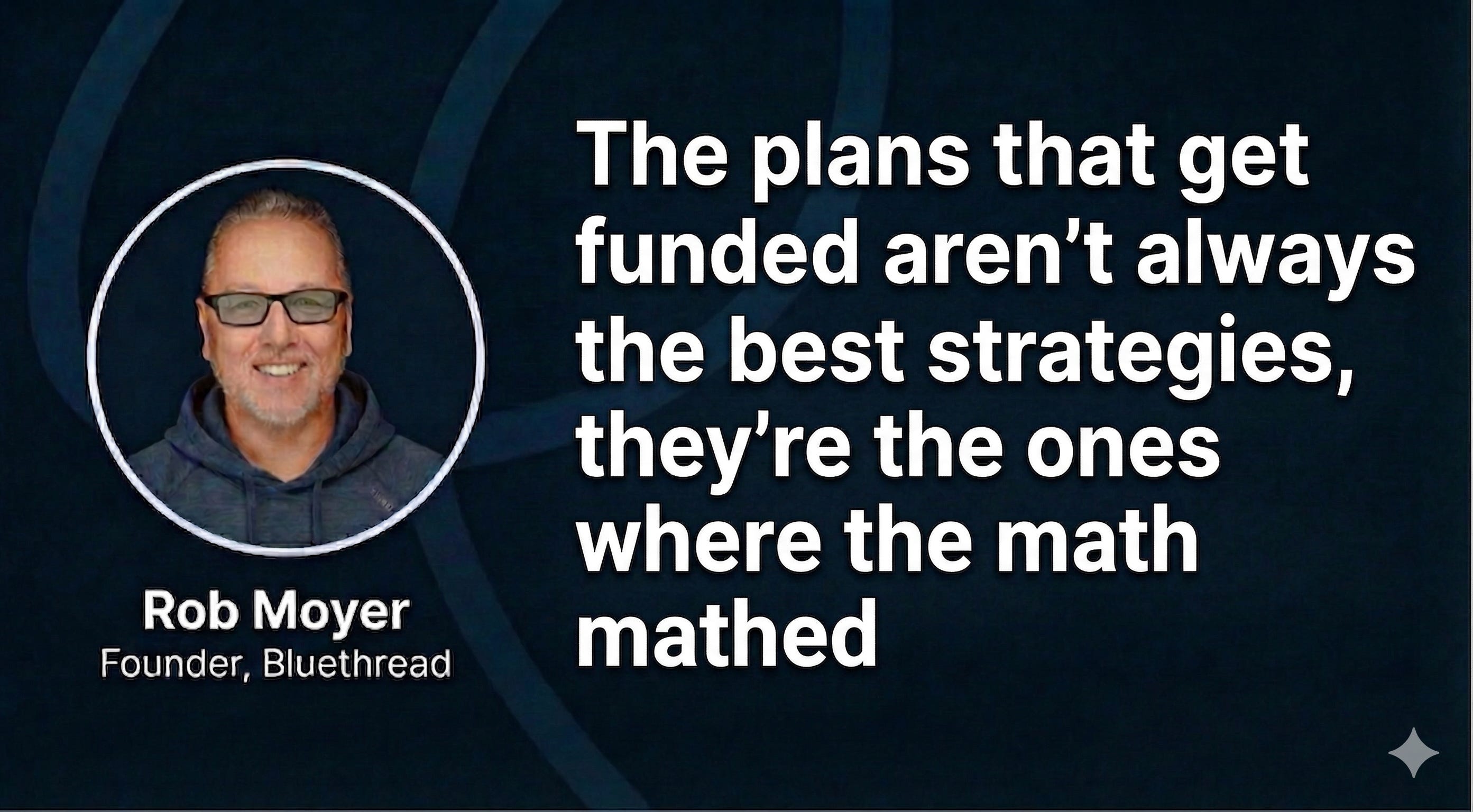
I’ve sat on both sides of that table. The plans that get funded aren’t always the best strategies. They’re the ones where the math mathed.
Make sure yours does.