


As I started building Bluethread around a simple belief: ecosystems are becoming the operating system for modern go to market teams. Not a side channel. Not an optional motion. The operating system. And because of that shift, the partner manager role is quietly becoming one of the most leveraged seats in GTM. But only if the person in that seat evolves.
We are entering a moment when the companies that win will rely on partner managers who think like operators. People who understand customers and market signals. People who bring clarity to co-sell motions. People who can plug into the real workflows where sales and product teams already live. People who build trust across companies, not just within them.
If I were starting as a partner manager today, or leveling up for the next stage of my career, the skills I would focus on fall into three areas. People, Process, and Technology. These are not categories for organizing a training program. These are the forces that will define whether you become essential in the ecosystem era. Essentially, the role will evolve into a Partnership GTM engineer.
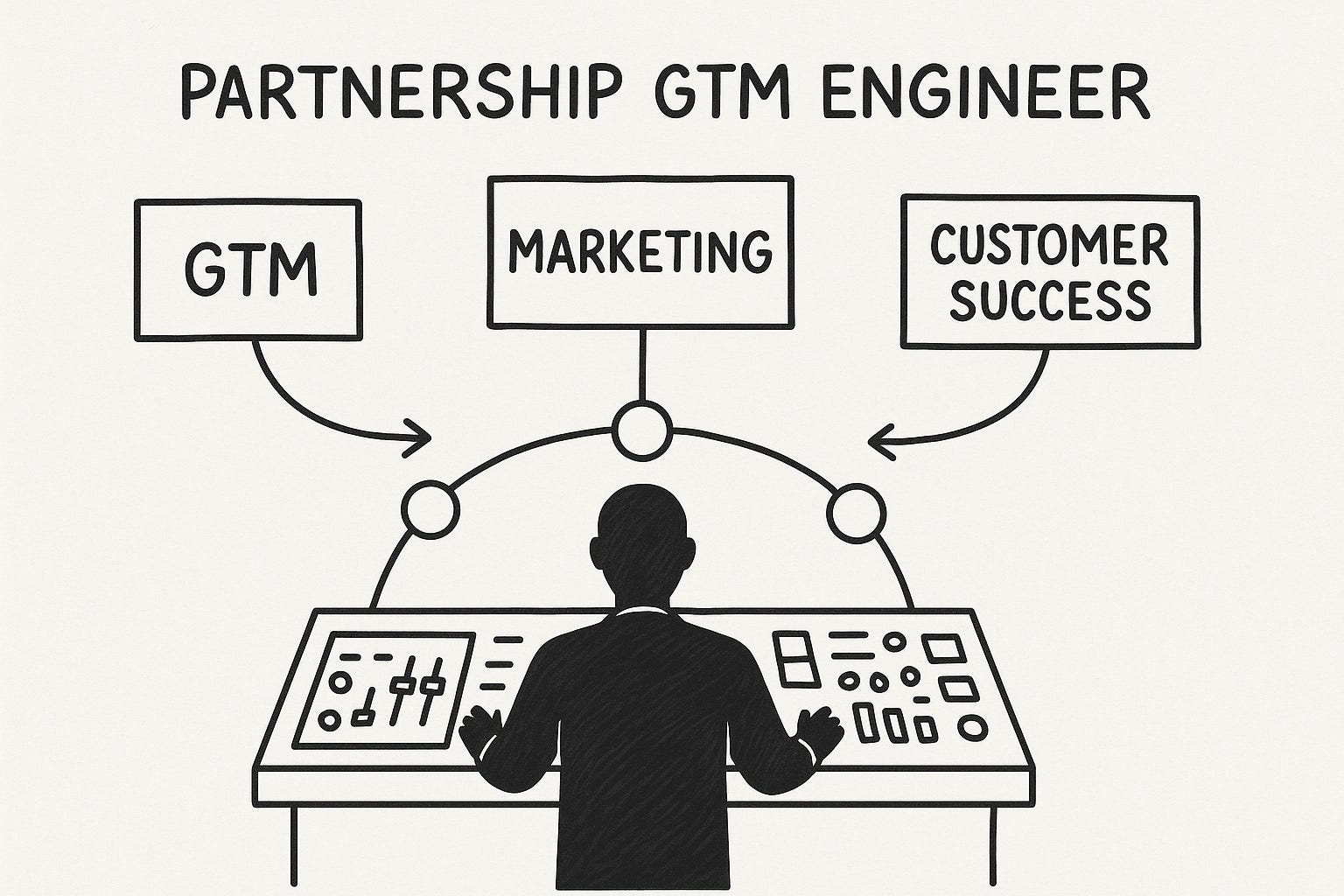
1. PEOPLE: Trust Is Your Currency
Why this matters now?
Across every partnership I have supported through Bluethread, trust has been the single biggest predictor of success. Trust accelerates co-sell. Trust reduces internal friction. Trust brings partners back to the table even when deals have not landed yet. Trust is a growth asset.
But trust does not appear by accident. It forms around a clear story that both companies can repeat.
Narrative Selling
The partner managers who create lift in their programs are the ones who can articulate a simple, compelling explanation of why the partnership exists and who it helps. When sellers believe the story, they act on it. When executives believe the story, they invest in it. When partners believe the story, they commit to it.
A good partnership story is a filter, an invitation, and a contract all at once. It sets intent. It builds confidence. It reduces hesitation.
How to improve quickly:
Reduce your partnership pitch to a spoken one minute narrative.
Test it with sellers and watch for clarity. If they cannot repeat it, refine it.
Build a small library of customer stories that reinforce your message.
Narrative skill is a people skill, but it is also a leadership signal. It shows you can give teams a reason to care.
2. PROCESS: Attribution and Execution Create Leverage
Why this matters now?
The partner managers who thrive today are the ones who operate with rigor. The ones who treat partner motions like any other revenue function. The ones who understand what is happening inside CRM and how partner influence shows up in pipeline quality and deal velocity.
This is the part most partner organizations still struggle with. And it is where the operator model becomes a real advantage.
Ecosystem Attribution Literacy
Attribution literacy is more than understanding fields in CRM. It is understanding how a company thinks about growth. When a partner manager can walk into a forecast call and explain why partner influenced deals close faster, or why partner sourced deals land in higher intent segments, they gain credibility instantly.
This matters because internal alignment is often harder than external alignment. Clear process is how you remove that friction.
Running Co-Sell Like a Sales Leader
Co-sell is finally maturing. What used to be a relationship heavy motion is now becoming a structured revenue motion. When partner managers run co-sell with the same discipline a regional sales leader uses, deals move faster and partners stay engaged.
This is exactly the type of operator mindset Bluethread is built around. You become a multiplier for both organizations, not just a coordinator.
How to improve quickly:
Learn from RevOps how partner data moves through your CRM.
Observe how sales leaders validate deals and apply the same thinking to partner opportunities.
Create a simple co-sell workflow that you follow consistently.
Process is not bureaucracy. Process is how partner managers create predictability in an unpredictable environment.
3. TECHNOLOGY: The Modern PM Is a Tech Savvy Operator
Why this matters now?
This is the area where the role is changing fastest. Partner managers are now expected to move across Slack, Teams, Salesforce, HubSpot, Gong, Crossbeam, PRM, marketplaces, AI tools, and internal analytics. Your impact grows when you understand how these systems work together and how partner signals flow through them.
This is where the operator mindset makes the biggest difference. Technology is not about tools. It is about system design and integration.
AI Assisted Partner Feedback Loops
Every partner conversation contains insight. But insight only becomes valuable when it becomes visible and actionable. AI now gives partner managers the ability to summarize partner calls, identify recurring product requests, and surface market signals that would have otherwise been lost.
This matters because ecosystems grow stronger when information flows quickly. AI is the amplifier that makes a lean partner team feel much larger.
Being Fluent in GTM Workflows
Sales teams live in Slack, Teams, CRM, and Gong. Product teams live in roadmaps, customer signals, and Jira. If your partnership motions do not meet these teams in the environments where they already work, your program creates friction instead of momentum.
A modern PM needs enough technical fluency to integrate motions into the existing GTM machine rather than operating beside it.
How to improve quickly:
Use AI tools to turn partner conversations into structured summaries and share them with product and sales.
Deliver a partner signal digest that highlights themes, customer insights, and competitive shifts.
Learn marketplace basics so you can speak confidently with product, finance, and sales leaders.
Technology fluency is not about being an engineer. It is about being an effective operator.
The Real Why Behind All of This
At Bluethread, I think about partner management not as a standalone role but as an operating model. A partner manager is becoming a cross functional leader who sits at the intersection of product, sales, community, and ecosystem strategy.
The companies that win will be the ones who recognize this shift early and invest in partner managers who can act with clarity, bring systems thinking, and build trust at scale.
The people skills create access.
The process skills create credibility.
The technology skills create scale.
The next generation of partner managers who grow their careers will be the ones who can move between these three modes with confidence.
If you found value in this perspective and want deeper essays on the operator model, ecosystem strategy, and the future of partner led GTM, please consider becoming a paid subscriber.
You can visit my website bluethread.io to understand more about Bluethread.
Stop looking at my calendar and emails haha